
How Does AEO Help a Website Appear in AI Search Results?
 xt-admin
Search is changing. Instead of always scanning a list of traditional blue links, users increasingly ask complete questions and expect direct answers from AI-powered search experiences. This shift has created growing interest in Answer Engine Optimization (AEO).
But what would AEO mean for a website?
An effective AEO Strategy organizes and optimizes a website’s information for search engines and artificial intelligence, improving clarity about the questions the business answers, the services it offers, and the expertise behind its information.
For companies that invest in SEO, content, and Generative AI, AEO can become a critical pillar in the search visibility strategy.
What Is AEO?
Answer Engine Optimization (AEO) refers to optimizing the creation and composition of web content in such a way that it directly addresses user questions and is more understandable to search engines and answer-focused search results.
Traditional SEO usually aims to improve a page’s ability to rank for specific queries.
AEO adds another layer: making information easy to identify, understand, extract, and use as an answer.
For example, instead of targeting only:
“AEO services”
an AEO-focused page may also address questions such as:
- What is AEO?
- How does AEO work?
- Why is AEO important?
- How does AEO differ from SEO?
- How can a business optimize for AI search?
This question-and-answer approach aligns content with conversational search behavior.
How Does AEO Help With AI Search?
AEO does not guarantee that a website will appear in an AI-generated answer. However, it can make a website’s information clearer and more accessible to search systems.
Here are several ways AEO supports AI-search visibility.
1. AEO Matches Conversational Search Queries
People increasingly search using complete questions rather than short keyword phrases.
For example:
Traditional query:
“SEO audit”
Conversational query:
“What does an SEO audit include?”
An effective AEO Strategy anticipates these questions and provides direct, useful answers.
This helps create content that aligns with different ways users naturally express the same search intent.
2. It Makes Important Information Easier to Understand
AI-powered search systems need to interpret information from webpages.
Well-structured content can make that process easier.
An AEO-friendly page may use:
- Clear H1 and H2 headings
- Question-based subheadings
- Short introductory answers
- Supporting explanations
- Bullet points
- Tables
- Definitions
- FAQs
- Descriptive internal links
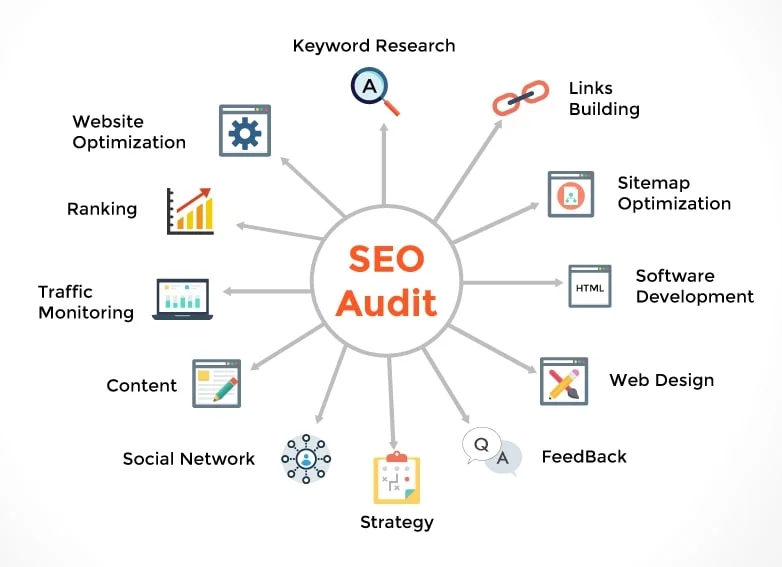
What Is an SEO Audit?
An SEO audit is a process of analyzing a website to evaluate its technical structure, content, search engine optimization, visibility, and other aspects that impact a site’s performance in organic search results.
The primary response is provided initially, with the following text presenting supplementary information. This structure works well for both human readers and answer-oriented search experiences.
3. AEO Supports Question-Based Content
Questions are at the heart of AEO.
Your content should identify the questions your audience is genuinely asking and provide useful answers.
Common AEO Question Types
What: What is an AEO strategy?
Why: Why does AEO matter for AI search?
How: How can a website optimize for AI search?
When: When should a business start AEO?
Where: Where should AEO content be added to a website?
Which: Which website pages should be optimized for AEO?
This creates a natural connection between user intent and website content.
4. AEO Strengthens Your Content Marketing Strategy
AEO shouldn’t exist separately from your content marketing strategy.
Instead, the two can work together.
A traditional content strategy might focus on publishing blog posts around keywords.
An AEO-focused content marketing strategy can go further by creating content around:
- Customer questions
- Search intent
- Industry terminology
- Comparisons
- Definitions
- How-to queries
- FAQs
- Problems and solutions
- Local questions
- Product and service questions
For example, a technology company could build a content cluster around:
5. AEO Helps Demonstrate Expertise
AEO isn’t just about answering questions quickly.
Answer quality matters.
This is where EEAT principles become important.
Your content should demonstrate:
- Experience
Include real examples, project insights, workflows, or lessons learned where appropriate.
- Expertise
Explain complex topics accurately and in language your audience can understand.
- Authoritativeness
Connect content to a credible business, author, organization, or relevant industry expertise.
- Trust
Provide transparent business information, accurate claims, useful references, and clear contact information.
For XTAPPS, technology-focused content can be strengthened by explaining concepts such as Generative AI, AEO, SEO, website development, and AI search with digital marketing strategy from a practical business perspective.
6. AEO Works With SEO — It Doesn’t Replace It
A common misconception is that businesses need to choose between SEO and AEO.
They don’t.
SEO and AEO address overlapping but somewhat different optimization needs.
| SEO | AEO |
| Targets search visibility | Targets answer visibility |
| Keyword optimization | Question and answer optimization |
| Organic rankings | AI and answer-oriented search experiences |
| Technical optimization | Clear information structure |
| Search intent | Question intent |
| Content relevance | Direct answer usefulness |
| Internal linking | Context and entity relationships |
7. An SEO Audit Can Reveal AEO Opportunities
Before creating an AEO strategy, start with an SEO audit.
An audit can identify existing content that could be improved for answer-focused search.
Review:
- Existing rankings
- Search queries
- High-impression pages
- Featured snippet opportunities
- Question-based keywords
- Existing FAQs
- Thin content
- Content gaps
- Internal linking
- Heading structure
- Metadata
- Structured data
- Technical issues
You may find yourself discovering that your website already contains valuable information, which isn’t effectively organized to directly answer the questions of your user.
This content can be easily expanded and reworked within the existing structure.
8. Build an AEO Checklist for Every Important Page
Use this simple AEO checklist when reviewing website content.
AEO Checklist
- Does the page answer a specific user question?
- Is the primary answer easy to find?
- Does the introduction address the user’s intent?
- Are headings descriptive and question-focused?
- Does the content provide supporting context?
- Are related questions answered?
- Is the information accurate and current?
- Does the page demonstrate relevant expertise?
- Are internal links used naturally?
- Is structured data appropriate for the page?
- Is the content easy to scan?
- Does the page provide a clear next step?
This checklist can be applied to service pages, blog posts, landing pages, FAQs, and resource guides.
Final Takeaway
A successful AEO Strategy uses question-based content, search intent, effective information architecture, EEAT signals, semantic relevance, technical SEO and a well-crafted content marketing strategy.
For businesses looking to prepare for the future of search, it is no longer just about creating more content, but rather building trust and providing comprehensive answers to the questions customers are searching for.
With the help of SEO, AEO, content strategy consulting and regular SEO audits, a business website can instill a sense of trust with a more prepared approach to the future of search.
Frequently Asked Questions About AEO
Company Portfolio